
Birdsongs of Spring by Wild Advisor & Artist Jennifer Moore
By PPN Wild Advisor & Artist Jennifer Moore
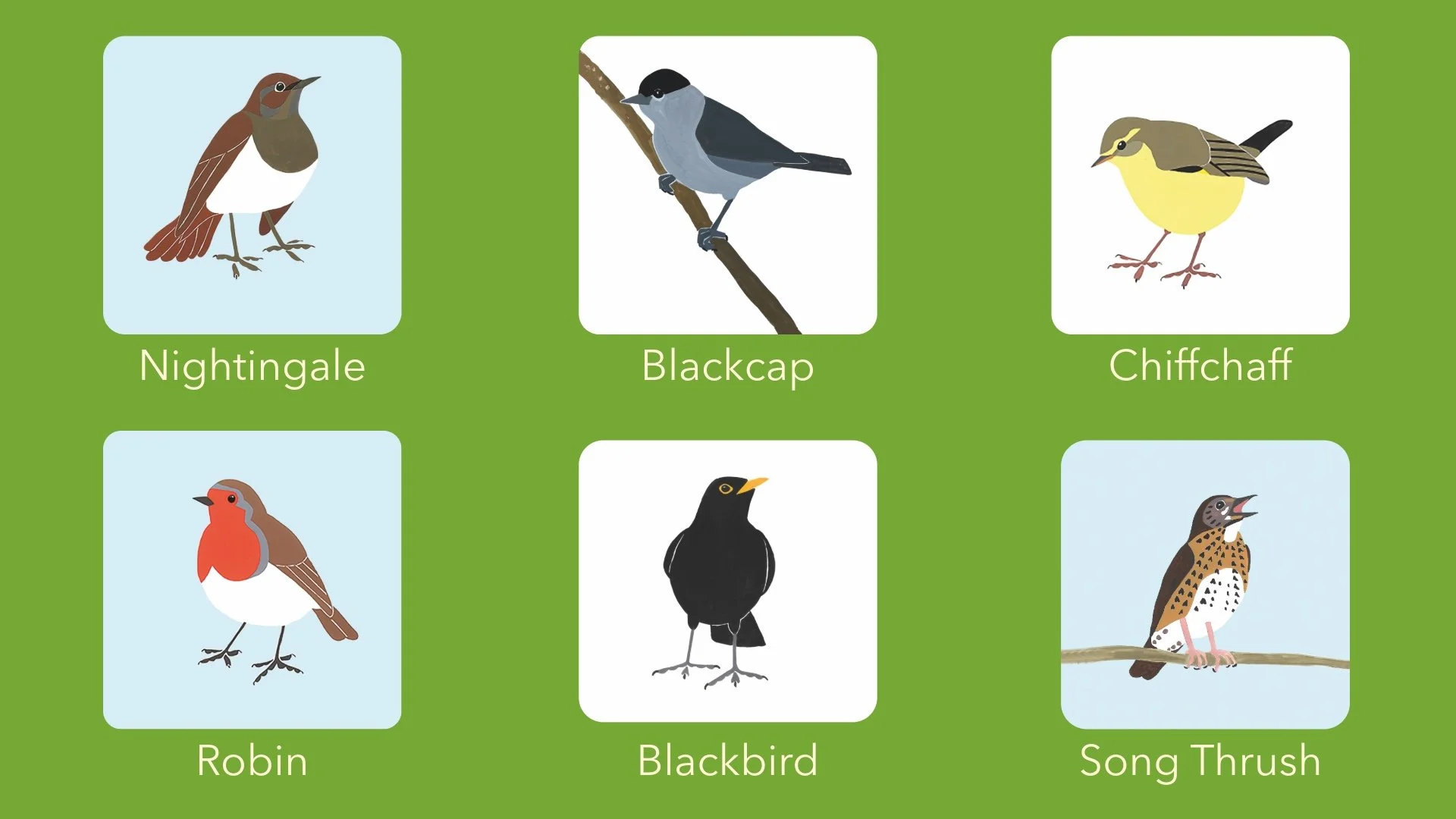
Now that the birds are nesting, and the migratory species are back of their summer holiday here in the UK, it’s a great time to get out and listen out for some of these springtime songsters. Here’s what to listen out for with some of my favourites:
Robin
With cheerful and tuneful notes, Robins sing most of the year, and often do from a head-height perch making their song quite an easy one to get used to. They are very territorial little birds, and will energetically chase intruders away. Both sexes sing, and as they look so similar, it’s almost impossible to tell whether the Robin you see is a male or female.
Blackbird
One of the first birds to sing in the dawn chorus, these large thrushes have a delightful rich song full of musical phrases. Loud and clear, the slight slurring of the notes gives a distinctive “hurdy-gurdy” tone to the song, or as I like to say, it sounds as if they’re singing with a West Country accent. It’s just the males that sing and female Blackbirds are chocolate brown.
Song Thrush
A bit like a Blackbird singing from a Robin’s song sheet, Song Thrushes sound out from the treetops with clear, ringing notes. They are often mistaken for a Nightingale (more on those later) but even though they don’t quite reach those dizzy musical heights, Song Thrushes are well-named, and were once kept as captive birds because of their beautiful voice. They are heard all year round too, and that is something to be thankful for.
Blackcap
One of our visiting warblers, the Blackcap sings a busy, buzzy song with lots of chaotic phrases and notes. It sounds upbeat and slightly hectic, and is interspersed with a sharp tapping sound, a bit like two stones being knocked together. This is their contact or alarm call, so pairs will speak to each other within the shrubbery as they look around the branches for food. Males with their smart black caps are outgoing and confident so are easy to spot.
Garden Warbler
Like a Blackcap with a hangover, these summer visitors have a similar rapid delivery to their song but sound altogether more irritated. Brownish-green, they tend to keep themselves to themselves and are not easy to spot as they hang around in thickets and scruffy hedges.
Chiffchaff
This one is easy as it says its name, even though it sings the two-syllable song rather laboriously. As well as chiff-chaff-chiff-chiff-chaff this little migratory warbler also has some chirrupy noises and single notes in its repertoire.
Nightingale
Once heard, never forgotten. They stay hidden in scrubby vegetation so the sudden volley of liquid notes from a hedgerow is like happening upon an opera singer practising an aria. Almost complacent, with no idea of how arresting they sound, Nightingales sing with a glorious, effortless depth and clarity. Despite their name, they sing at any time of the day

Jennifer is a wildlife illustrator, and continues to develop her series of birdwatching logbooks for shops and organisations around Britain and further afield.
As a Wild Advisor with the PPN, she offers art workshops based around birds and nature.
Are you also a PPN Member? Find out how you can also contribute to the blog here.